
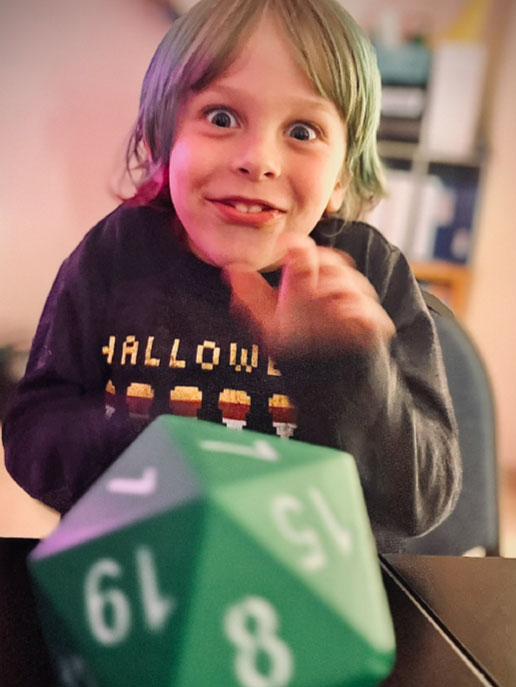
We hear it all the time:
“I can’t wait until my kids are old enough to play “Dungeons & Dragons”
Well, I’m here to tell you – they already are.
Kids don’t need to be able to read the Player’s Handbook to step into a world of imagination, storytelling, and collaboration. In fact, the heart of D&D which we believe to be creativity, teamwork and curiosity; are things toddlers and preschoolers already do beautifully when we give them space to explore.
As a former career nanny and lifelong fantasy fan, I’ve seen how early storytelling can spark empathy, confidence, and problem-solving in little ones. So if you’ve ever wondered how to start a D&D-style adventure with your youngest explorers, here’s your gentle guide to getting started.
Start with Story, Not Rules
The magic of Dungeons & Dragons and other Table Top Role Playing Games (TTRPG’s) isn’t in the dice or the stats. It’s in the story. For toddlers and preschoolers, think less “game mechanics” and more “interactive storytelling.”
Gather a few small toys or wooden figures, spread out a blanket, and say:
“We’re going on an adventure today. Where do you think it begins?”
Let their answers shape the story. Maybe it’s a forest. Maybe it’s under the sea. Maybe it’s a kingdom ruled by cats. The key is to let their imagination lead the way.
Keep it short (10–20 minutes is plenty). And remember it’s not about finishing the story. The goal is to explore, make creative decisions, and wonder.
Make It Hands-On and Tactile
Young children learn best through touch and movement, so let them roll the dice, move their characters, and act out what happens.
Use simple props: a felt “map,”or this cute fairy tail rug, montessori stacking stones, woodland forest animals, maybe even a scarf for a magic river. In fact you could use these scarfs to represent what time of day it is their story. Warmer colors to reflect day time and cooler colors for the evenings.
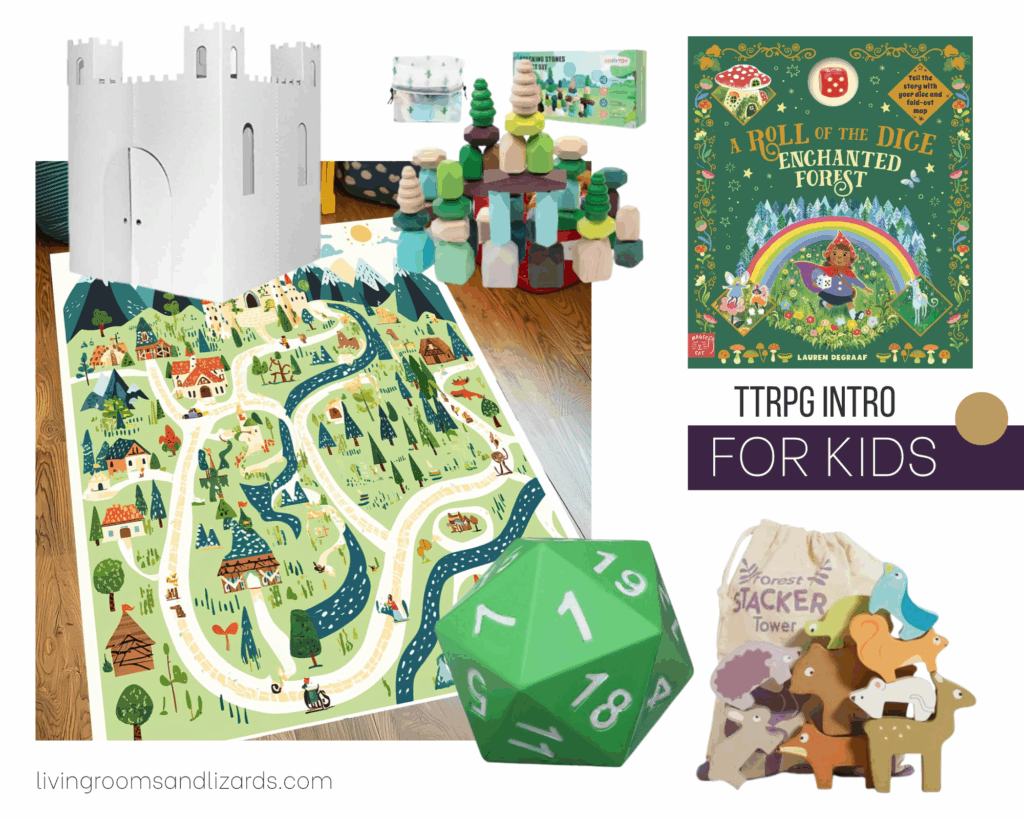
I also love using big foam dice and story cubes. They’re safer for little hands and add just the right amount of suspense where each roll can become a moment of wonder:
- 1–5: Low rolls bring small, funny obstacles. Nothing scary, just a twist to the story.
- 6–10: Medium rolls invite kids to think creatively or ask for help.
- 11–15: These rolls bring success and discovery a good balance of reward and story growth.
- 16-20: High rolls unlock special, magical, or heartwarming outcomes.
This turns decision-making into an embodied experience. A great example of the kind of play Montessori Education advocates for.
Bring in Tools That Spark Imagination
If you’re looking for something ready-made, I can’t recommend “Roll to Decide: Enchanted Forest Adventure Book” enough. It’s a beautiful introduction to the concept of dice-based storytelling. Kids roll, read, and choose what happens next all inside the pages of a magical forest journey.
It’s the perfect bridge between story time and learning TTRPG’s like Dungeons and Dragons.
You can find that book and a full list of toddler-friendly fantasy play resources on our Livingrooms & Lizards Amazon list here.
Keep It Cooperative
Traditional games often lean on competition but in storytelling games, and ones we encourage everyone wins together. These are called cooperative games. In cooperative games we lean into each other and learn about each other’s strengths and weaknesses so we can help each other out.
One way to create a cooperative experience is to frame the adventure as a shared goal: “We’re trying to help the fox find her way home” or “We need to collect three magic crystals to wake up the sleeping dragon.”
Encourage teamwork, decision-making, and empathy. Ask questions like:
“What do you think the fox is feeling right now?”
“How can we help the dragon without waking it too soon?”
“Which one of your toys do you think would be best at climbing the tree”
You’re teaching emotional awareness without a single lecture and your little one is learning to see the world through different eyes.
End with Reflection
At the end of each adventure, pause for a quiet moment together.
Ask:
- “What was your favorite part?”
- “Was anything tricky?”
- “What might happen next time?”
This helps children process their experience and builds memory and storytelling skills which are the foundation for literacy and empathy.
Lady Leigh’s Quick Tips for Little Adventurers
- Keep sessions short and joyful.
- Use visuals — dice, cards, figures, or even drawings.
- Let them lead even if you have an idea you think is super cool.
- Add new layers slowly as they grow like new dice, maps, character cards.
- Always celebrate their creativity
The beauty of introducing TTRPG’s like D&D early is that you’re not just teaching a game. You’re helping your child learn to imagine, to communicate, to listen, and to collaborate. You’re saying, your ideas matter while teaching them how to use their voice.
And that’s what every good adventurer big or small needs to hear.
If you want to see the tools I recommend for getting started, visit my curated list here:
👉 Living Rooms & Lizards Amazon Adventure List
And don’t forget! If you have older children you can download our Simplified Character Sheet designed to make TTRPG’s simple, fun and family friendly, great for kids and new players alike.
Because the best stories aren’t just told, they’re played.— Lady Leigh of Livingrooms & Lizards